Apple Pencil Kindergarten
A Whimsical Back to School Design That Actually Works on Real Fabric
I stitched Apple Pencil Kindergarten onto a linen-cotton tea towel last week — not for testing, but for a client’s boutique kitchen line. The moment the needle stopped and I peeled away the stabilizer, I knew this wasn’t just another “cute” school-themed embroidery file. It’s got personality with purpose: rounded shapes, intentional negative space, and a gentle asymmetry that reads as handmade, not mass-produced. That matters — especially when your customers are buying a handmade product, not a print.
First Impressions: Charm Without Clutter
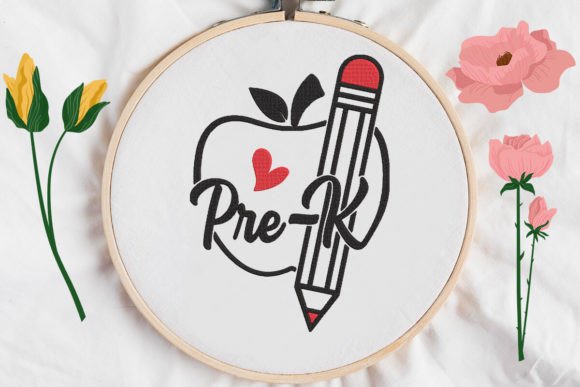
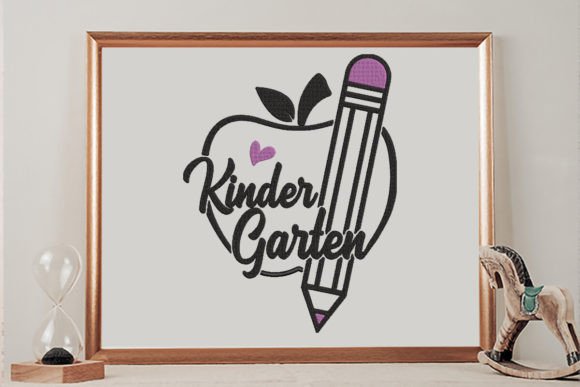
The design features a stylized Apple Pencil leaning playfully against a chalkboard-style frame, with soft crayon-like lettering spelling “Kindergarten.” No sharp angles. No dense fill stitch overload. It leans into satin stitch for the pencil body and subtle running stitch for chalk-dust texture — just enough detail to read clearly at 3.5 inches tall, but forgiving enough to hold up on textured fabrics like terry cloth or unbleached canvas. As an embroidery designer, I appreciate how it avoids visual noise: no tiny loops, no overlapping thread paths, no micro-details that vanish after washing. That makes Apple Pencil Kindergarten unusually versatile for real-world use — whether you’re stitching a personalized gift for a teacher or producing a batch of tote bag designs for your Etsy shop.
Where It Shines (and Where It Needs Care)
I’ve used Apple Pencil Kindergarten across six different fabric types and three hoop sizes — from a 4x4 for baby onesies to a 5x7 for sweatshirt backs. Here’s what held up — and what didn’t:
- Sweatshirt embroidery: Clean and bold on midweight fleece. The satin stitch on the pencil stayed crisp; the chalkboard frame softened just enough to feel cozy, not stiff.
- Tote bag design: Perfect center-front placement on natural cotton canvas. The open layout lets the fabric breathe — no puckering, even without heavy cutaway stabilizer.
- Baby embroidery: Used it on a gauzy muslin bib — light stabilizer, low-tension settings, and it came out airy and sweet. Parents love the gentle theme, and it doesn’t overwhelm delicate sizing.
- Embroidered patch: Stitched it onto twill, then heat-sealed the back. Held up beautifully through two rounds of commercial laundering — no fraying at the pencil tip or letter edges.
But here’s where I slowed down: on dark fabric, the chalkboard frame can fade unless you choose high-contrast thread colors. And on stretchy knits — say, a lightweight raglan tee — I added tear-away + light cutaway stabilizer and reduced stitch density slightly in the frame area. Not a dealbreaker, just smart prep.
What It Adds to Your Craft Business
As an Etsy seller who’s listed over 200 digital embroidery files, I judge designs by how they convert. Apple Pencil Kindergarten does something subtle but powerful: it signals care. Not just in execution, but in intention. Customers scrolling for Back To School gifts don’t want generic apples or backpacks — they want warmth, nostalgia, and quiet confidence. This design delivers that without shouting. It fits seamlessly into a cohesive collection: pair it with simple monograms, minimalist ABC motifs, or soft watercolor-style borders. For small shop owners building brand consistency, that’s gold.
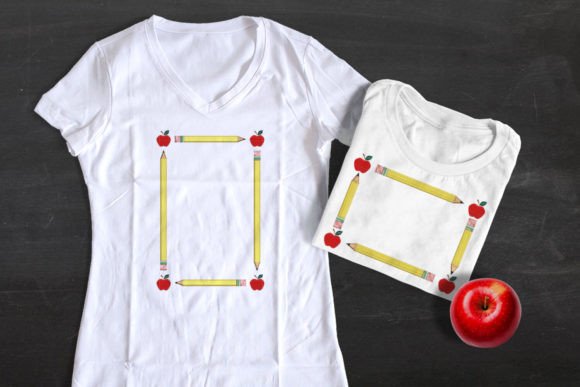
It also works hard in mockups. I dropped Apple Pencil Kindergarten into printable mockups for tea towels, aprons, and denim jackets — and every version looked intentional, not slapped on. That’s rare. Many school-themed designs feel dated or overly literal. This one feels current, thoughtful, and quietly joyful.
Practical Designer Notes Before You Stitch
If you’re preparing Apple Pencil Kindergarten for client work, craft fair inventory, or your next digital product drop, here’s what I’d do — based on real runs, not theory:
- Test on scrap fabric first — especially if using textured weaves or blends. Linen, terry, and brushed cotton all behave differently under that satin stitch.
- Check thread color contrast early. Try it in black-on-cream and white-on-navy side-by-side. The frame relies on tone-on-tone subtlety — which reads beautifully on light fabric but needs reinforcement on darks.
- Review stitch density. It’s moderate overall, but the chalkboard lines have slightly higher density than the pencil body. If stitching on thin fabric like voile or baby jersey, consider reducing density 5–8% in those areas.
- Confirm hoop size compatibility. It fits comfortably in a 4x4, but the full charm comes out in a 5x7 — especially for custom apparel like sweatshirts or pillow covers.
- Inspect small details before finalizing. The eraser end of the pencil is intentionally minimal — not a flaw, but a design choice. Make sure it reads as intentional in your final output.
- Test in black-and-white mockups. This design relies on shape and rhythm more than color, so grayscale previews tell you instantly whether it’ll hold up in printed catalogs or social thumbnails.
- Use proper stabilizer. Light cutaway for knits, tear-away for stable wovens, and fusible + tear-away for nap-heavy fabrics like terry. Skipping this step risks distortion in the curved pencil form.
- Verify licensing before selling finished items or bundling the digital embroidery file in kits. Since it’s labeled for commercial embroidery, confirm whether resale of stitched products or redistribution of the file is permitted.
Final Thought: A Design That Grows With You
Apple Pencil Kindergarten isn’t just for September. I’ve already reimagined it for baby shower gifts (stitched on organic cotton swaddle blankets), teacher appreciation bundles (paired with embroidered pens and notebooks), and even holiday embroidery — think “first day of kindergarten” ornaments stitched on wool felt. Its flexibility isn’t accidental. It’s built into the spacing, scale, and restraint. That’s why it earns space in my go-to folder of reliable design assets.
If you sell handmade product or manage a craft business, this is the kind of embroidery file that builds trust: clean, confident, and quietly memorable. It doesn’t try to be everything — it just does its job, beautifully, across seasons, surfaces, and stories.